

Introduction
Proximal femoral fractures are significant orthopaedic injuries involving the upper portion of the femur, including the trochanteric and subtrochanteric regions. These fractures may present with different patterns of displacement, fragmentation, and instability, requiring careful evaluation and an appropriate fixation approach.
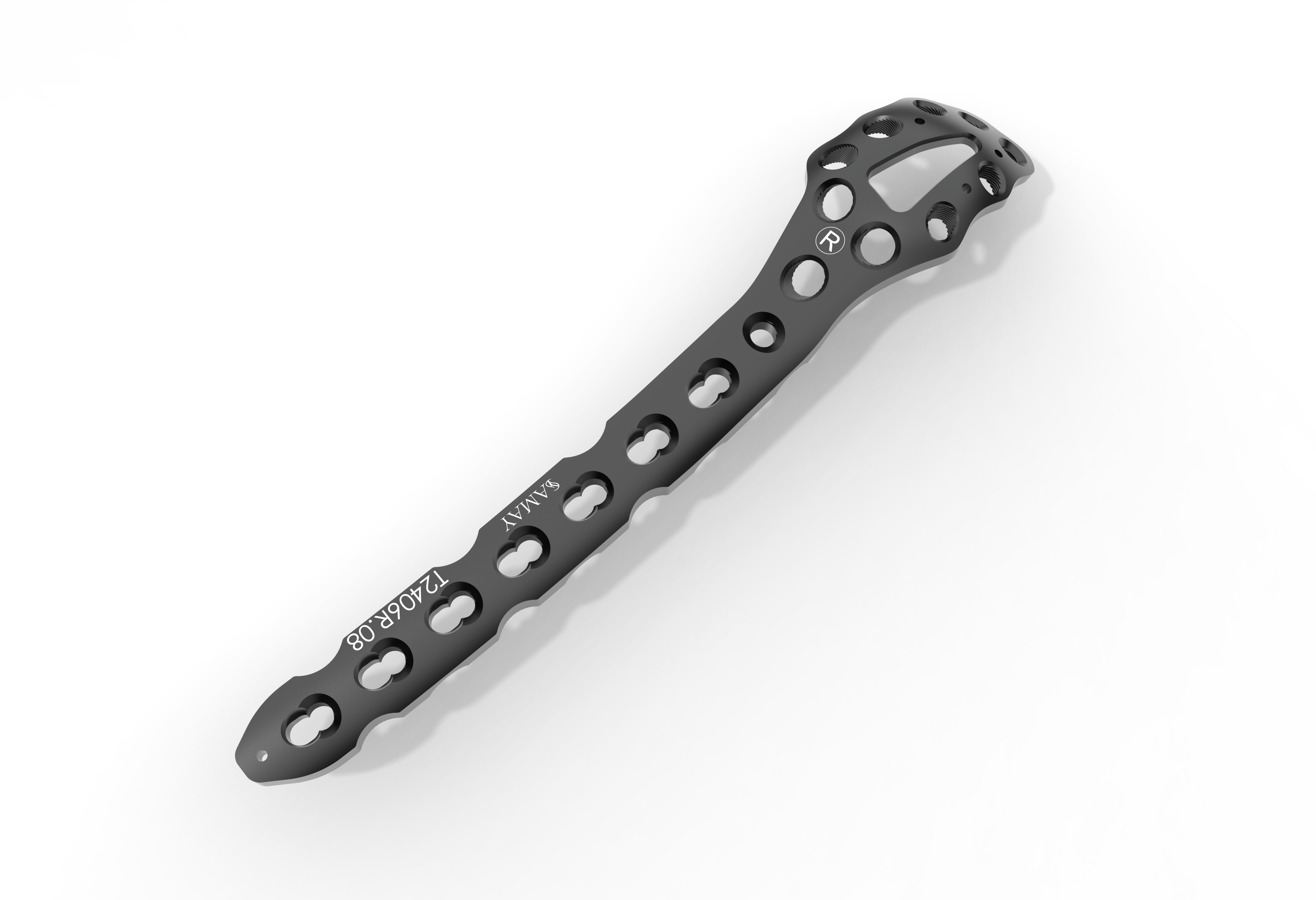
In this case, the surgical procedure demonstrates the application of a Proximal Femur Type 3 Plate with screw fixation for managing a proximal femoral fracture. The fixation approach aims to restore and maintain appropriate bone alignment while providing mechanical stability to support the fracture-healing process.
This case highlights the importance of appropriate implant selection, accurate positioning, and precision-engineered orthopaedic solutions in proximal femur fracture management.
Pre-operative X-ray: Proximal Femur Fracture
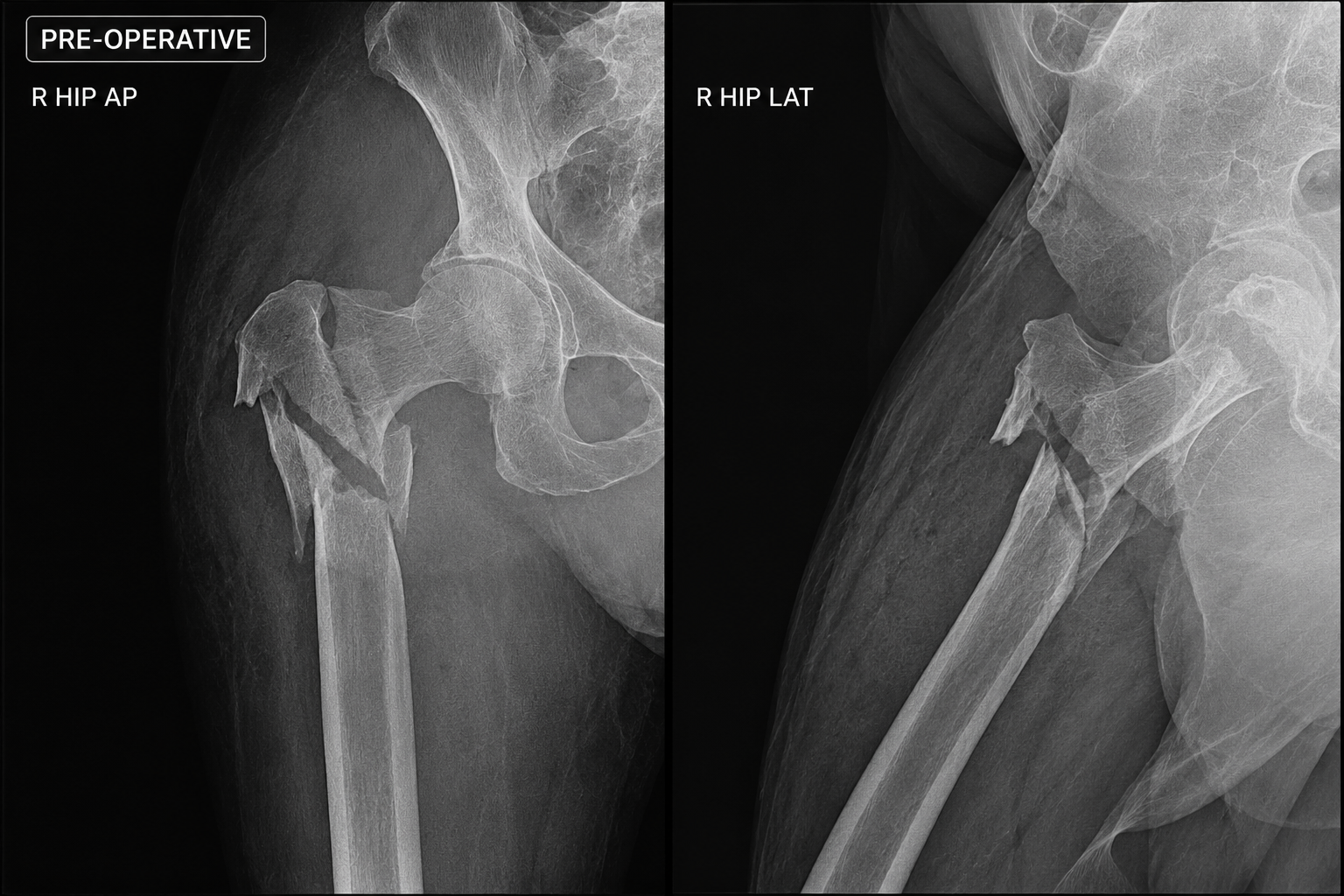
Preoperative radiograph demonstrating the proximal femoral fracture before surgical fixation.
Understanding Proximal Femur Type 3 Plate Fixation
The Proximal Femur Type 3 Plate is designed for selected fractures involving the upper femur. Its anatomical configuration and screw fixation options support the stabilization of suitable proximal femoral fracture patterns.
The choice of plate and screw configuration depends on the fracture location, bone quality, anatomical requirements, and the treating surgeon's assessment.
Key objectives of fixation include:
Anatomical Alignment: Maintaining the appropriate position and alignment of the proximal femur.
Fracture Stabilization: Providing mechanical support to maintain the reduced fracture configuration.
Fixation Strength: Achieving suitable stability through appropriate plate positioning and screw placement.
Healing Support: Maintaining fixation to facilitate the natural bone-healing process.
Key Surgical Considerations
1. Preoperative Evaluation
Clinical examination and radiological investigations help determine the fracture location, displacement, fracture configuration, and bone quality. These findings assist the surgeon in selecting an appropriate fixation method and implant.
2. Fracture Reduction and Implant Positioning
Appropriate fracture reduction is an essential step before definitive fixation. The Proximal Femur Type 3 Plate is positioned according to the anatomical requirements and the intended surgical technique to achieve the planned fixation construct.
3. Screw Placement and Fixation
Screw selection, direction, and placement are determined by the implant design, fracture pattern, and available bone stock. Appropriate screw positioning helps establish the required mechanical stability of the fixation construct.
4. Final Fixation Assessment
Intraoperative imaging is used to assess implant positioning, screw placement, fracture alignment, and the overall fixation construct before completion of the procedure.
Intraoperative Surgical Image
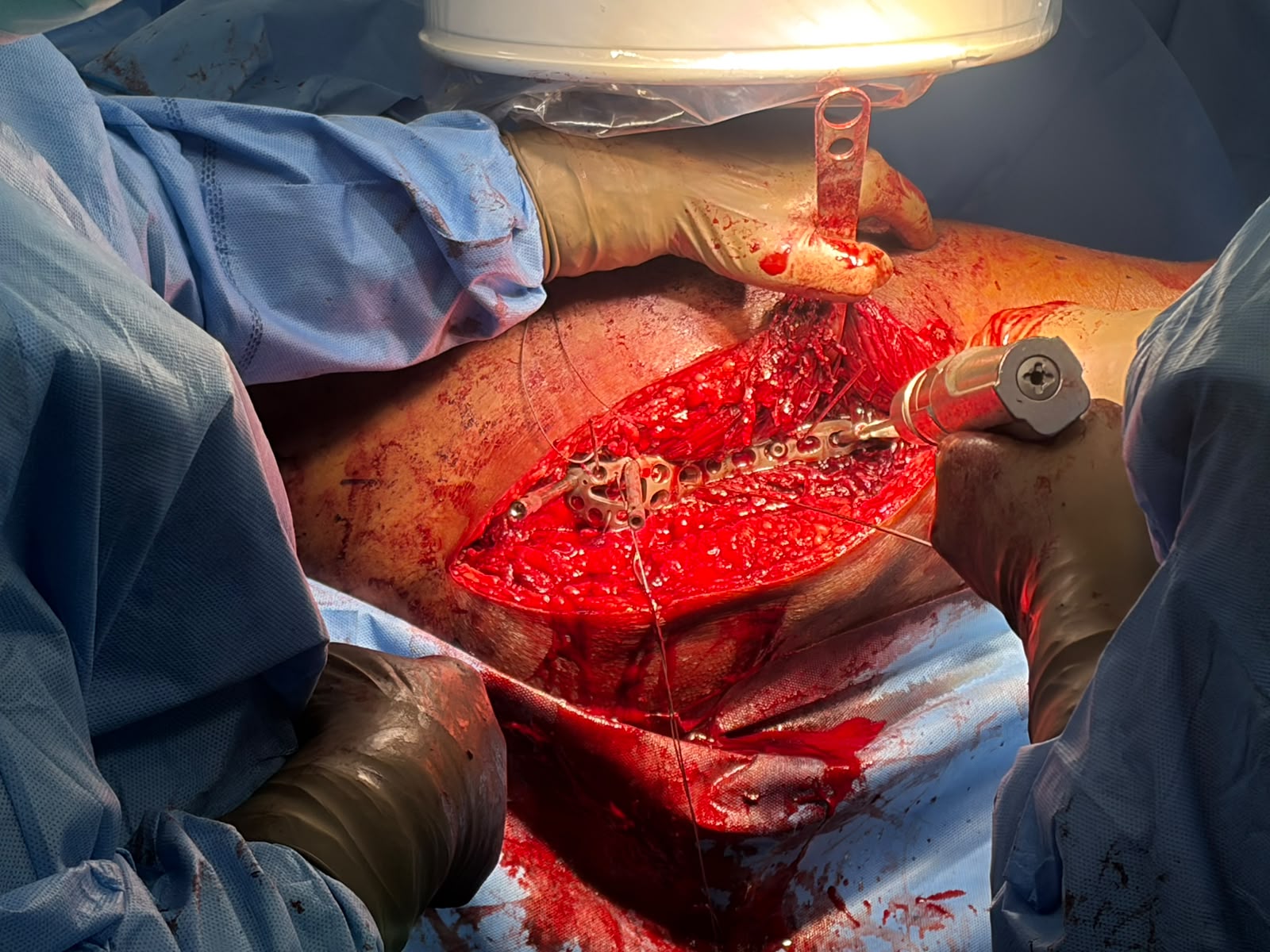
Intraoperative application of the Proximal Femur Type 3 Plate during fracture fixation.
Postoperative X-ray
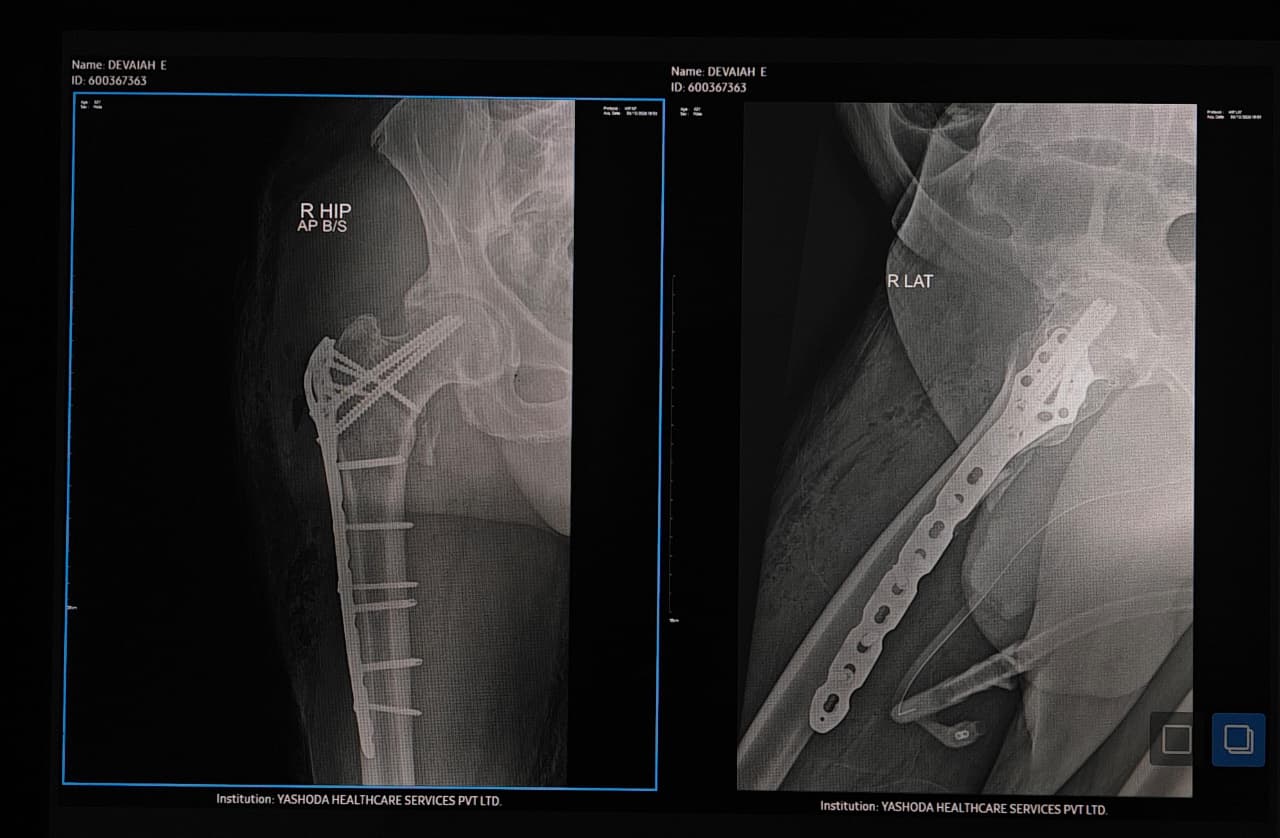
Postoperative radiograph demonstrating the Proximal Femur Type 3 Plate fixation.
Implant Specifications:
The Proximal Femur Type 3 Plate system is manufactured using carefully selected implant materials and precision-controlled manufacturing processes.
| Implant | Material | Size |
|---|---|---|
| Proximal Femur Type 3 Plate | Titanium GR.5 | 9 Hole |
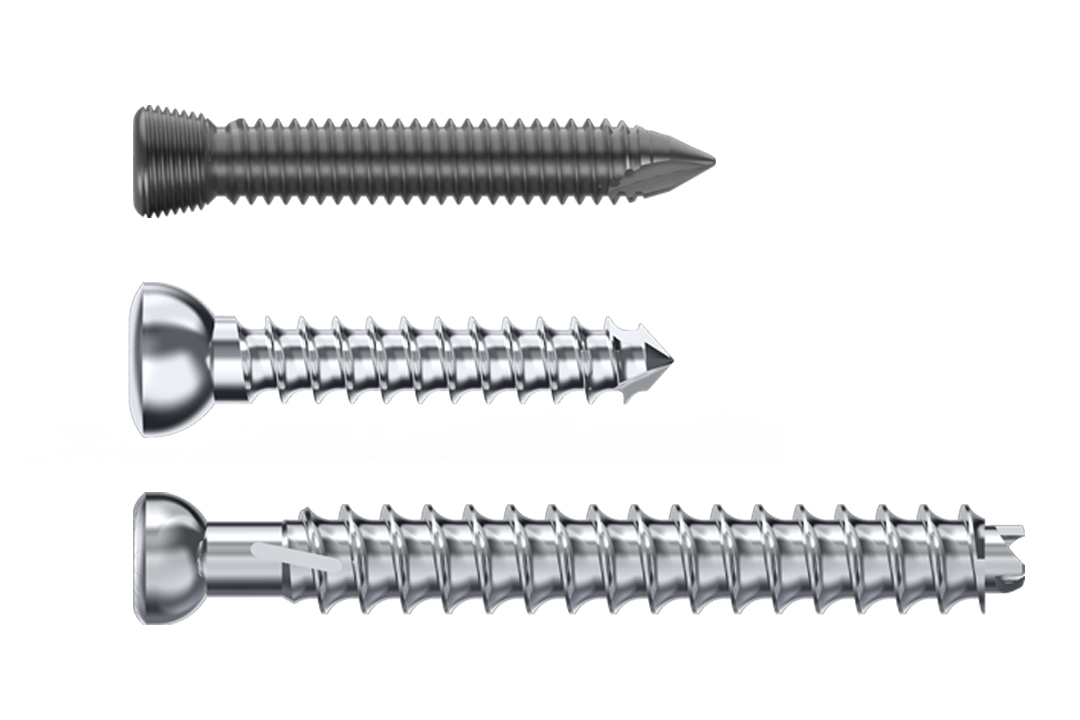
| 7.3mm Cannulated Cancellous Screw Fully Threaded | Titanium GR.5 | 105mm |
| 4.5mm Cortical Screws | Titanium GR.5 | 70mm |
| 5mm Locking screws | Titanium GR.5 | 80mm |
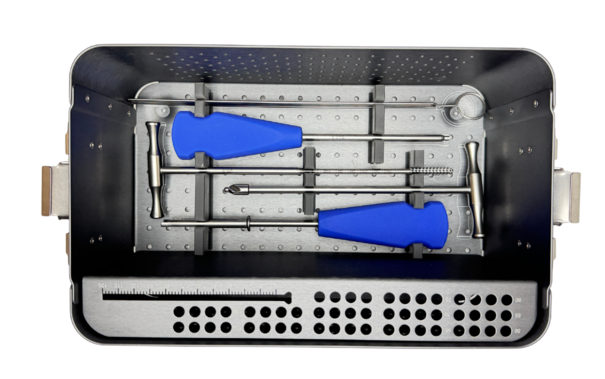
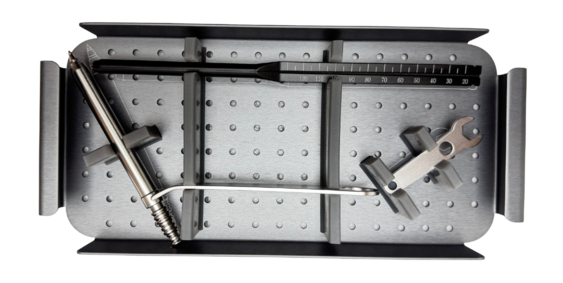
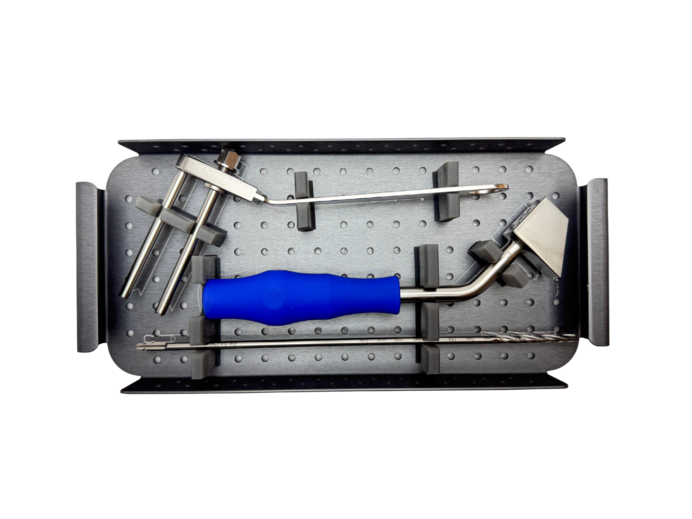
Instrument Set – Proximal Femur Instrument Set
The Proximal Femur Instrument Set from Samay Surgical Pvt. Ltd. is designed to support the surgical application of the Proximal Femur Type 3 Plate system.
The set comprises precision-engineered surgical instruments intended to assist with implant positioning, drilling, screw measurement, and fixation. Each instrument is designed to support an organized surgical workflow and compatibility with the corresponding implant system.
Postoperative Management
Postoperative care is individualized according to fracture characteristics, fixation stability, and the patient's overall condition.
Important aspects include:
- Monitoring the surgical site, swelling, and postoperative pain.
- Initiating appropriate physiotherapy to maintain joint mobility.
- Gradually progressing weight-bearing according to the treating surgeon's instructions.
- Conducting follow-up radiographic assessments to monitor fracture healing and implant position.
The Role of Precision Engineering in Proximal Femur Implants
The quality and performance of orthopaedic implants depend on several factors, including material selection, dimensional accuracy, implant design, and manufacturing consistency.
At Samay Surgical Pvt. Ltd., precision engineering plays an important role in the development and manufacturing of orthopaedic trauma implants. Our manufacturing processes emphasize dimensional consistency, material quality, and controlled production standards to meet the requirements of modern orthopaedic surgery.
With advanced CNC machining capabilities, precision manufacturing processes, and stringent quality-control practices, Samay Surgical focuses on delivering reliable and cost-effective implant solutions for orthopaedic trauma applications.
Clinical Outcome
The clinical outcome of proximal femur fixation depends on fracture characteristics, bone quality, fixation stability, and postoperative rehabilitation.
Radiographic follow-up and clinical assessment help evaluate fracture alignment, healing progression, and functional recovery.
Conclusion
Proximal Femur Type 3 Plate fixation is a surgical option for managing selected fractures of the upper femur. Appropriate fracture reduction, implant positioning, screw configuration, and postoperative management are important considerations in achieving a stable fixation construct.
This surgical application highlights the importance of implant design, compatible instrumentation, and precision manufacturing in orthopaedic fracture management.
Samay Surgical Pvt. Ltd. remains committed to advancing orthopaedic implant manufacturing through precision engineering, consistent quality, and innovative solutions that support the evolving needs of orthopaedic trauma surgery.
Frequently Asked Questions:
1. What is a Proximal Femur Type 3 Plate used for?
A Proximal Femur Type 3 Plate is used for the fixation of selected proximal femoral fractures. It is designed to provide structural support and help maintain fracture alignment during the healing process.
2. Which types of fractures can be treated using a Proximal Femur Type 3 Plate?
It may be used for selected fractures involving the proximal femur, depending on the fracture pattern, anatomical location, bone quality, and the surgeon's assessment.
3. What is the material used in the Proximal Femur Type 3 Plate?
Orthopaedic plates are commonly manufactured using implant-grade materials such as Titanium Alloy (Ti-6Al-4V) or Stainless Steel, depending on the implant specification. The exact material should be confirmed from the product documentation.
4. What is the importance of screw placement during proximal femur fixation?
Proper screw selection, direction, and positioning are essential for achieving the intended fixation stability. Screw placement depends on the plate design, fracture configuration, and available bone stock.
5. What instruments are required for Proximal Femur Type 3 Plate fixation?
The compatible Proximal Femur Instrument Set generally includes instruments for drilling, depth measurement, screw insertion, plate positioning, and fixation. The exact instrumentation depends on the implant system.
6. How is implant positioning assessed during surgery?
Intraoperative fluoroscopy or X-ray imaging is used to evaluate fracture reduction, plate positioning, screw placement, and the overall fixation construct.
7. What factors influence healing after proximal femur fracture fixation?
Fracture configuration, bone quality, fixation stability, patient health, rehabilitation, and adherence to postoperative instructions can influence the healing process.
8. Why is precision manufacturing important in proximal femur implants?
Precision manufacturing helps maintain dimensional accuracy, consistent implant specifications, and compatibility between implants and their corresponding instruments. These factors are important for reliable implant performance.
9. Does Samay Surgical Pvt. Ltd. provide compatible instrumentation with its Proximal Femur Type 3 Plate?
Yes. Samay Surgical Pvt. Ltd. offers a compatible Proximal Femur Instrument Set designed to support implant positioning, drilling, screw measurement, and fixation during surgical procedures.